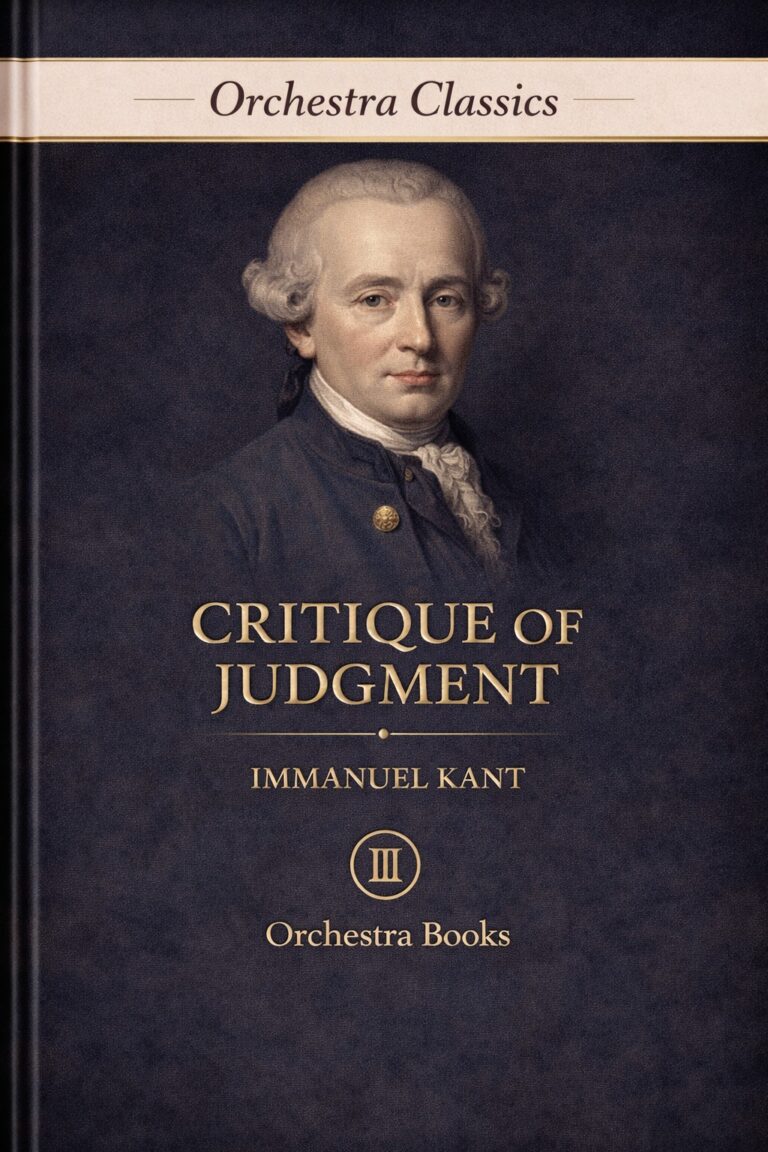
Immanuel Kant, a German philosopher from Königsberg in the Kingdom of Prussia, stands as a central figure in the Enlightenment and modern Western philosophy. His work is renowned for its depth and rigor, spanning a remarkable range of disciplines, including epistemology, metaphysics, logic, ethics, aesthetics, political theory, and the philosophy of religion. Kant's systematic approach has shaped the course of philosophical inquiry, earning him a reputation for both analytical precision and profound originality in tackling the fundamental questions of human thought and morality.
Reading focus
Why read
Kant's impact resonates through philosophy and beyond, shaping crucial debates about knowledge, morality, and human autonomy. Readers encounter not only foundational concepts but also a method for rigorous critical inquiry. His arguments and principles remain vital for anyone exploring the nature of reason, freedom, and the limits of human understanding.
Themes
Kant explores the conditions and limits of human knowledge, the foundations of moral action, and the nature of aesthetic judgment. He addresses how reason structures our experience, the boundaries between science and metaphysics, and the principles underlying law, politics, and religion. His work reflects a persistent engagement with autonomy, rationality, and the universal aspects of human thought.
Your privacy choices
We use essential cookies to run the bookshop. Optional cookies are used only with your permission. You can change your choice at any time. Read our cookie policy.